
PEOPLE · RESEARCH · COLLABORATION
Meet the GICUNED team
A multidisciplinary team studying personal meanings, assessment and psychological change.
19 current profiles · Psychology, methodology and technology
Current team
No matching profiles.

Group coordinator
Luis Ángel Saúl
GICUNED coordinator, PhD in Psychology and clinical psychologist. His research focuses on personal meanings, cognitive conflicts and processes of psychological change.
Research areas · provisional
Full biography
PhD and master’s degree in psychotherapy interventions from the University of Salamanca, Spain. He is a certified clinical psychologist and works as an associate professor at the National Distance Education University (UNED) in Madrid, Spain. He has experience of more than 20 years in research, with an extensive production of scientific articles. Its main area of application has been the evaluation of personal meanings of clinical subjects and the identification of cognitive conflicts. He has made important contributions in the field of clinical psychology when it comes to highlighting the role of different cognitive conflicts in maintaining the subject’s psychological problems and exploring the “internal coherence”, from the subject’s own meanings, of therapeutic non-change, even when the subject wants such a change. Likewise, he has made more than a hundred presentations at national and international conferences and collaborated in several funded research projects. The latest of them on Psychological treatment of depression in women with fibromyalgia and Cognitive therapy for unipolar depression: efficacy of a therapy focused on implicative dilemmas, in which the evaluation protocol of the Repertory Grid Technique (TR) is used.
He is the director of the UNED Constructivist Research Group (GICUNED). A multidisciplinary group, which includes clinical psychologists, methodologists, computer engineers, and health workers from the field of medicine and nursing.

Current team
Alejandro Sanfeliciano Calvo
PhD in Health Psychology. He studies psychological change through graph theory and fuzzy cognitive maps, contributing to WimpGrid, GridFCM and PsychLab.
Research areas · provisional
Full biography
He holds a PhD in Health Psychology from UNED. On 27 May 2026, he defended his doctoral thesis, «Modelado matemático de la construcción del cambio psicológico: una aproximación desde la teoría de grafos al estudio de sistemas de significados personales», supervised by Luis Ángel Saúl Gutiérrez, and received the highest grade, Sobresaliente cum laude. His research combines Personal Construct Psychology, graph theory and fuzzy cognitive maps to study the construction of psychological change.
He graduated in Psychology from UNED and obtained a Master’s Degree in Psychology Research at the same university, specialising in the social construction of knowledge. His interest in the methodological and mathematical aspects of psychology led him to psychometrics, particularly the Repertory Grid Technique and its underlying multivariate analysis.
Within GICUNED, he has contributed to the development of the Weighted Implication Grid (WimpGrid), mathematical indicators and computational tools. His work is linked to the joint creation of GridFCM and PsychLab with Luis Ángel Saúl.

Current team
Maite Benítez Santos
Psychology graduate with a background in information systems. She studies self-knowledge, resistance to change and the maintenance of healthy habits using PsychLab.
Research areas · provisional
Full biography
Higher Technician in Computer Systems Administration and Psychology graduate from UNED. Her professional career spanned over two decades in a multinational telecommunications company, where she held various roles in marketing, sales, and key account management. The constant changes in roles, teams, and methodologies sparked her interest in how people adapt—or resist—change from a psychological perspective.
Focusing on psychological change, she redirected her career toward research in psychology, with a particular interest in self-knowledge as a transformative element in the maintenance of long-term healthy habits in individuals with cardiac conditions. To explore this, she used the virtual laboratory PsychLab as a tool for analyzing personal meaning systems and identifying psychological barriers.
To deepen this line of work, she has completed postgraduate studies in Sport Psychology, Positive Psychology, Emotional Intelligence, and Mental Health, and is currently continuing her training in Community and Social Psychology.
She has collaborated with GICUNED in the development of indices related to resistance to change, the creation of outreach materials, dissemination through social media, the design of educational content, and student support in training processes related to PsychLab.

Current team
Miriam Vela Nieves
Psychology graduate, journalist and PsychLab specialist. She contributes to assessment and intervention protocols, laboratory development and training.
Research areas · provisional
Full biography
Miriam holds a degree in Journalism and a Master’s in Publishing. In this field, she has over 15 years of professional experience in the publication of fiction novels and the development of multimedia courses. She also holds a degree in Psychology with a specialization in Clinical Intervention in Mental and Behavioral Disorders from UNED, and she is a specialist at the PsychLab Virtual Laboratory for Psychological Change. In recent years, she has delved into the use of innovative digital platforms to understand how people think, feel, and change, from an integrative constructivist perspective.
Her vocational interest in communication and deep commitment to language as a tool for personal and social transformation have led her to collaborate full-time with the Constructivist Research Group at UNED. There, she contributes to the development of PsychLab, the research of psychological assessment and intervention protocols, and the design, tutoring, and guidance of training and specialization courses. She is currently combining this work with her studies in the Master’s in General Health Psychology.
Current team
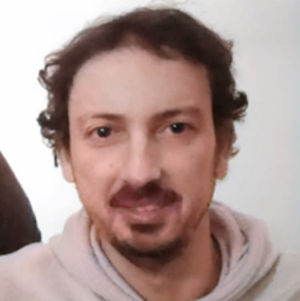
Javier Fernández Muñoz
Law graduate with postgraduate training in consultancy, project management and foundation management. He is completing his Psychology degree at UNED. His contributions to GICUNED focus on artificial intelligence, ethics and complex systems.
Research areas · provisional
Full biography
He holds a degree in Law from the University of Seville, specialising in business law.
He has postgraduate training in consultancy and project management, as well as in foundation management.
He is completing his degree in Psychology at UNED and plans to pursue a research master’s degree at the same university.
He has worked mainly in the private sector, collaborating with business clients, public institutions, universities, non-profit organisations and technology centres in strategy, project design and management, and fundraising.

Current team
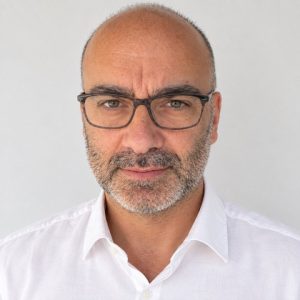
Carlos Marcos Hurtado Martínez
Computer engineer, psychology graduate, and PhD student in psychology at UNED. His research at GICUNED focuses on modeling personal meaning systems using fuzzy cognitive maps, graph data science, biostatistics, and explainable artificial intelligence.
Research areas · provisional
Full biography
PhD student in Psychology at the Universidad Nacional de Educación a Distancia (UNED), holder of a degree in Computer Engineering from the University of Murcia and a degree in Psychology from UNED, with a specialization in Clinical Intervention in Mental and Behavioral Disorders. He holds a master’s degree in Bioinformatics and Biostatistics from UOC and the University of Barcelona, and a Master of Business Administration (MBA) from IDE-CESEM. He also holds a Master Certificate in Project Management (PMBOK–PMI) from Jones International University and University Expert qualifications in Medical Informatics from the University of Alicante and in Medical Genetics and Genomics from the Universidad Católica San Antonio de Murcia (UCAM).
He has co-authored scientific publications focusing on the application of mathematical and computational methods to psychology.
He has extensive experience managing and implementing technological solutions in the private sector. He has led projects involving enterprise resource planning (ERP) systems, engineering platforms, multivariate analysis of large datasets, artificial intelligence solutions, orchestration of data integration and transformation processes, distributed systems operations, and the deployment of complex communication network architectures. His professional experience also includes directing training programs for corporate clients and teaching engineering and technology certification courses, both in corporate environments and at public National Reference Centers for vocational training.
He is a registered member of the Official College of Psychology of Madrid. He is also a professional member of the ISACA Madrid Chapter, the Spanish Association for Artificial Intelligence (AEPIA), the Spanish Society of Biostatistics (SEB), the Spanish Society for Bioinformatics and Computational Biology (SEBiBC), and the Spanish Society of Statistics and Operations Research (SEIO).
Current team
Carlos Diaz Cano Arévalo
Information systems technician and Psychology student. He develops PsychLab Tools, QuitCoach and PsychSim, and contributes to PsychLab infrastructure.
Research areas · provisional
Full biography
He holds an Advanced Vocational Qualification in Computer Systems Administration and is in the final year of the Bachelor’s Degree in Psychology at UNED. He works as a technical network manager for a telecommunications operator, coordinating the network operations centre and the management of autonomous system AS41558. He has also completed cybersecurity training through INCIBE and UNED.
Combining his background in computing and psychology, he develops tools for constructivist training and research: PsychLab Tools, a web-based environment for working with the Repertory Grid Technique within Personal Construct Psychology; QuitCoach, a conversational assistant for smoking cessation based on the repertory grid interview; and PsychSim, a platform for simulating clinical interviews with virtual patients. He also contributes to PsychLab’s technical infrastructure.
His interests focus on applying artificial intelligence to the analysis of psychological change, with human supervision and verification of results against the data.
Current team
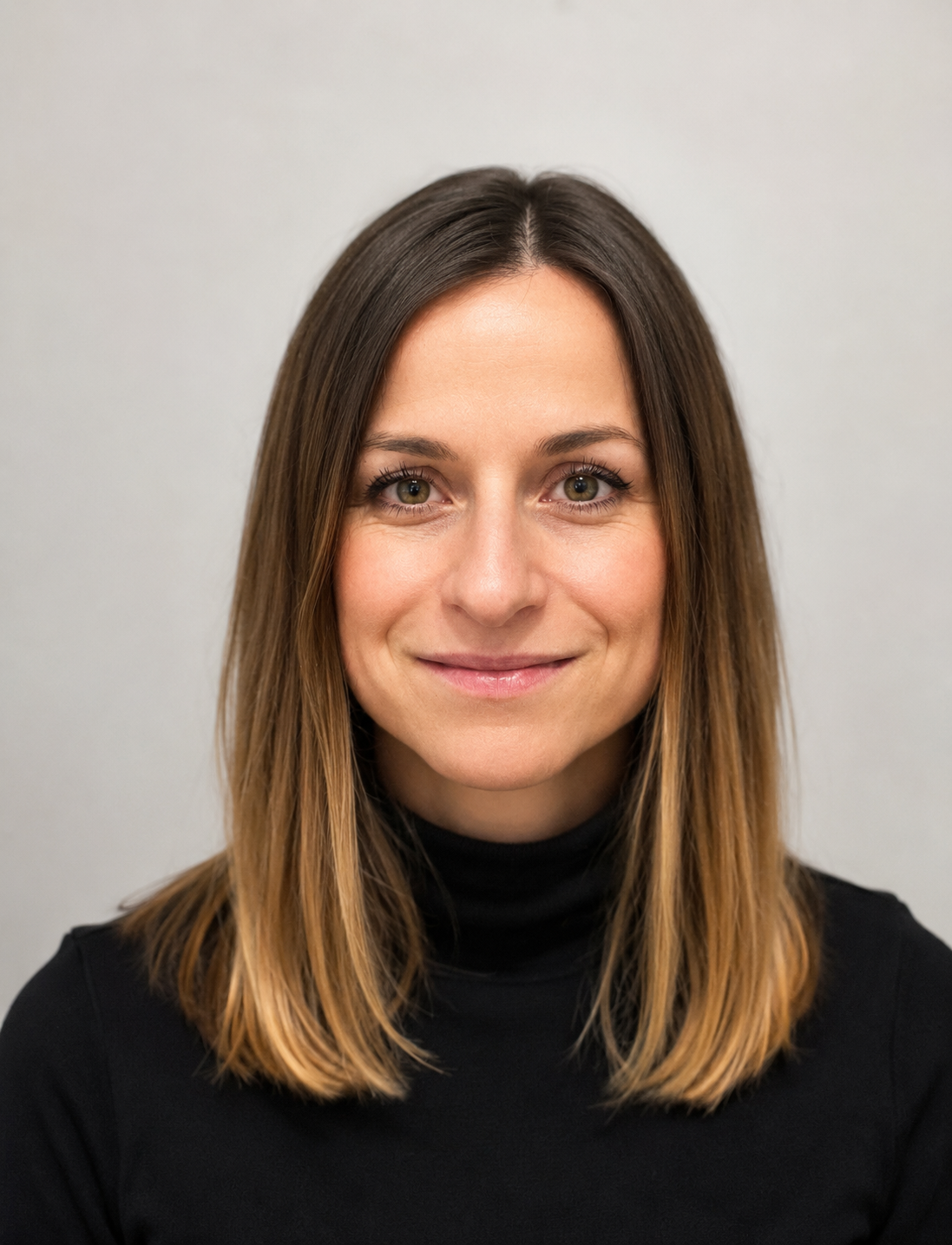
Vanesa Teruelo Prieto
Psychology graduate undertaking health psychology and psychotherapy training. She contributes to PsychLab and PsychSim, with interests in clinical assessment, contextual models and mental health.
Research areas · provisional
Full biography
She holds a Bachelor’s Degree in Psychology from UNED (professional registration no. AA01455), where she is currently pursuing the Master’s Degree in General Health Psychology (MPGS). Alongside this, she is studying for a Master’s Degree in Brief Psychotherapy, a specialisation in Acceptance and Commitment Therapy (ACT), and a postgraduate qualification in Clinical Psychopharmacology. She has training in psychosomatic medicine, the assessment and treatment of ADHD in children and adolescents, approaches to severe mental illness, and collaboration in constructivist research (GICUNED).
Her main interests focus on approaches to severe mental illness, psychosocial rehabilitation, and the application of contextual and constructivist models. As a research collaborator at GICUNED, her work focuses on the development of PsychLab and the PsychSim simulation tool, both aimed at technological innovation in clinical assessment.

Current team
Carolina Tomás Franco
Psychology graduate undertaking research methodology training. She develops AI and data analysis solutions, with interests in mathematical modelling and innovation.
Research areas · provisional
Full biography
She holds a Bachelor’s Degree in Psychology and is currently pursuing a Master’s Degree in Research Methodology in Behavioural and Health Sciences. She has training in data analysis and in developing artificial intelligence applications with Python.
She works as a developer for private companies, providing artificial intelligence and data analysis solutions. Previously, she spent almost twenty years providing direct support to people with disabilities and mental health difficulties.
Current team
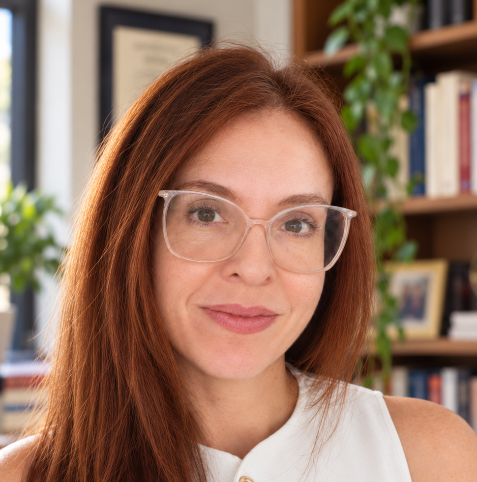
Cristina Gil López
PhD in Cognitive Neuroscience. She connects experimental methodology, behavioural science and digital mental health with the study of psychological change.
Research areas · provisional
Full biography
She holds a PhD in Cognitive Neuroscience from the Universitat de València and has more than fifteen years of research experience in cognitive neuroscience and behavioural science. Her career spans academic, clinical and industrial settings, integrating basic and applied research through a multimodal approach to human behaviour.
Her work combines experimental methodology and neurobiometric techniques to study cognitive, emotional and behavioural processes. She has international postdoctoral experience in both industry and academia: at Johnson & Johnson, she investigated emotional responses and sensory evaluation in health and wellbeing; at Université Grenoble Alpes, she worked in cognitive neuroscience and neuromodulation using electroencephalography (EEG) and transcranial direct current stimulation (tDCS). She has authored international scientific publications, serves as a reviewer for specialist journals and is a co-inventor of an international EEG-based patent.
She currently teaches in the Educational Psychology and Psychobiology area at the Universidad Internacional de La Rioja (UNIR), within the Master’s Degree in Neuropsychology and Education. She also works as an independent consultant in applied user behaviour research, helping organisations translate scientific evidence into useful information for decision-making.
Within GICUNED, she contributes to connecting PsychLab and Personal Construct Psychology with cognitive neuroscience, digital mental health and applied behavioural science. Her interests include precision psychology, barriers to psychological change, adherence, personalised interventions and the transfer of research to clinical, digital and organisational settings.

Current team
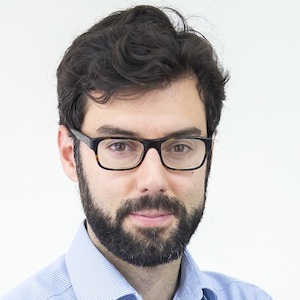
Rubén Heradio Gil
Professor at UNED and software engineering specialist. His research combines formal and statistical methods with technology development and applications.
Research areas · provisional
Full biography
He holds a Ph.D. in Software and Systems Engineering at the National Distance Education University (UNED) in Madrid (Spain), where he works as a Full Professor. With more than twenty years of experience, he has participated in 12 research projects, being the Principal Investigator of 3 of them, advised 6 doctoral theses, and published 43 “relevant” papers (according to the ANECA criteria). His research interests are focused on Software Engineering (particularly formal and statistical methods) and the application of new technologies to online education. He has carried out 5 post-doctoral research stays at Oxford University (UK), the Software Engineering Institute (Carnegie Mellon University, USA), and Johannes Kepler University Linz (Austria).
He is the head of the Software and Systems Engineering Research Group (GISS): http://www.issi.uned.es/giss
Current team
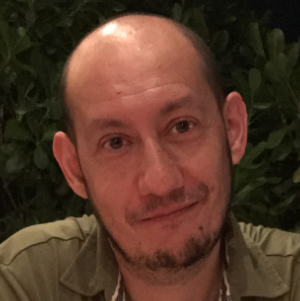
Adrián Barbero Rubio
Lecturer, researcher and therapist specialising in clinical interaction, contextual therapies and professional training.
Research areas · provisional
Full biography
Teacher and researcher at the National University of Distance Education (UNED, Madrid). Teacher and therapist in Madrid Institute of Contextual Psychology.
I am an expert in the analysis of clinical interaction and application of the contextual model for training professionals. I am an enthusiast of the experimental analysis of complex behaviors, following the line of research on the regulation of behavior from the Relational Frame Theory (TMR-RFT) and Acceptance and Commitment Therapy (ACT) and its implication in psychopathologies. Its objective is to enhance the connection of research with psychological care and training, on the one hand, analyzing, optimizing and applying therapeutic interactions and, on the other hand, providing up-to-date and quality training.
My training (Master of excellence, Visiting Scholar at UCLA and doctorate), teaching and research has been linked to the area of Personality, Evaluation and Psychological Treatment and, specifically, to the specialty of advances and techniques of Contextual Therapies for prevention and Health promotion.
My ultimate objective is focused on optimizing individual and group functioning in clinical, educational and sports settings.
Current team
José Antonio González del Puerto
Researcher with a background in Psychology and Telecommunications Engineering. His work includes representing personal meaning spaces through virtual reality.
Research areas · provisional
Full biography
PhD Student in health psychology (UNED)
Researcher with a FPU predoctoral contract in the Department of Social and Organizational Psychology of UNED.
Degree in Psychology by UNED (2019).
Higher Telecommunications Engineer from UPM (1995).

Current team
Marta Segura Valverde
Clinical psychologist with a PhD in Clinical Psychology and a research focus on health psychology. Her work addresses the Body Grid Technique, personal meanings and conflicts related to healthy habits.
Research areas · provisional
Full biography
Specialist in Clinical Psychology through Spanish Resident Psychologist (PIR)
PhD in Clinical and Health Psychology, Master’s Degrees in Research Psychology and Child Psychology. Equally she has accomplished trainings like Specialist in Psychotherapeutic Intervention and Expert in Brief Psychotherapy, as well as an Expert in Psychosomatic Medicine and Health Psychology and Eating Disorders. She supplements her formation with different expert courses oriented to clinical practice.
Currently, she exercises as Clinical Adjunct Psychology in the Psychiatric service General Hospital of Villalba. She develops her assistance activity with the adult population in external service, as well as in the consult and liaison psychology programs of psycho-oncology, obesity and Bariatric surgery, cardiac rehabilitation, intensive care, and perinatal care. She is Associate Professor of CCSS in Personality, Assessment and Clinical Psychology (UCM), and External Collaborating Professor in UNED.
Her scientific activity is framed in research group MEmind Study Group (ISS Jimenez Díaz Foundation) and GICUNED (UNED). As part of GICUNED she has promote clinical assessment through study and dissemination of the Body Repertory Grid Technique, specifically in woman with breast cancer. At the present time she participates in the exploration of personal meanings and cognitive conflicts involved in the maintenance healthy lifestyle habits in obese people. Also, she explores the change in personal meanings and cognitive structure in bariatric surgery patients, and influence of personal constructs systems on breastfeeding in pregnant mothers.

Current team
Juan Rafael Perea Luque
Researcher with a background in Psychology, Anthropology, Mathematics and engineering. His interests focus on assessing personal meanings and their dynamics over time.
Research areas · provisional
Full biography
He develops his academic research part-time. In Psychology field his scientific activity is framed in constructivist psychology, mainly in the personal meaning analysis through repertory grid technique application, with a special interest in the study of dynamic assessment and evolution (change analysis).
PhD in Sciences of Religion by Complutense University in Madrid, consequence about his coincident/hybrid interest between Psychology and Anthropology.
His academic training with humanistic character agglutinates Bachelor’s Degree in Social and Cultural Anthropology by UNED, as well as a Bachelor’s Degree Psychological (clinical psychology specialty) by the same institution.
He makes compatible a scientific-technical orientation in the formal sciences field by having a Degree in Mathematics (statistic specialty) by UNED, and in the same discipline Master’s Degree in Advances Mathematics (operative research and statistic specialty) by the same university.
Initially with a professional career oriented in the industrial sector, he has extensive training in different areas. Mainly highlighting among others, the engineering of industrial processes as Industrial Technical Engineer in Electricity – Industrial Electronics from the University of Malaga. In the field of informatics or computer science, he is a Technical Engineer in Computer Systems also from the university of Malaga, and in more specific disciplines such as environmental field is Master’s Degree in Environmental Management for Ecological Research Institute. Also, in the field of energy management is a specialist in Management and Business Energy Audit at the Polytechnic University of Madrid.
Currently his professional career is developed in the field of management, specifically in the management of real estate assets, specifically shopping centres, and functionally in the areas of direction and management. With extensive and specific training in this field, among others, Executive Master Business Administration (Executive-MBA) by the Business School Business Institute.

Current team
Ernesto Aranda Escolástico
Physicist with a PhD in Systems and Control Engineering. His research addresses networked control, cyber-physical systems and nonlinear dynamics.
Research areas · provisional
Full biography
He received his M.S. degree in physics from the Complutense University of Madrid in 2013. He received the second M.S. (the most outstanding graduate award) and the Ph.D. (best Ph.D. thesis award, international mention) in Systems and Control Engineering at UNED in 2014 and 2018, respectively. Currently, he works as Associate Professor in the Department of Software Engineering and Computer Systems of the UNED.
His research career is focused on the field of automation and control systems. Specifically, he has worked on networked control systems and cyber-physical systems, developing event-based control and multi-rate control strategies. He has also studied the experimental applications of these strategies, especially in nonlinear and underactuated systems. He has worked on 8 research projects related to these lines of work, producing more than 30 scientific publications, including 17 articles in journals indexed by the JCR.
He has carried out different research stays in international institutions, including the Eindhoven University of Technology (The Netherlands), the University of California – San Diego (USA), and the University of Brescia (Italy).

Current team
Javier González Encinas
PhD in Health Psychology and psychotherapist. His research addresses self-characterisation, narratives and their relationship with the Repertory Grid Technique.
Research areas · provisional
Full biography
Javier González Encinas is a PhD in Health Psychology (UNED) who practices private practice in Cáceres in his centre with health licensing authorization 10101263. He graduated in Health Psychology with a specialty in clinical practice in 2013. At the same time, he completed the University Expert in Advanced Methods in Applied Statistics from the UNED foundation. Later, he completed the Master’s Degree in Psychological Research, finishing it that same year 2014 with the final master’s thesis entitled “Study of the relationship between the HEXACO personality model, academic performance and subjective well-being in adolescents”. He recently got a doctorate with the work “Self-characterization Technique: study of reliability, consistency measures, convergence with the grid technique and ability to establish individual differences”.
His field of interest is the study of narratives, as well as addiction to video games, having participated as a docent in different dissemination events and collaborating with the Junta de Extremadura in training activities.
Currently, he combines private practice since 2014 with secretarial work for the Revista de Psicoterapia since 2018. Since 2017, he has collaborated as a psychotherapist for people affected by gambling addiction in the ONG Association of Gamblers in Rehabilitation (AJER) in Plasencia, the town where resides.

Current team
Marina Tejo Montilla
Health psychologist and doctoral researcher investigating the use of artificial intelligence as a tool in psychology.
Research areas · provisional
Full biography
Health Psychologist graduated with a specialization in Health Psychology and Intervention in Mental and Behavioral Disorders from the National Distance Education University (UNED). Master’s degree in General Health Psychology from Alfonso X el Sabio University (UAX), where she focused her research on adolescence and information and communication technologies (ICTs). Specialized in insomnia, tension headaches, stress, and self-esteem issues. Currently pursuing a doctorate in Health Psychology at UNED and collaborating with the constructivist research group (R&D&I) at UNED, with a focus on using Artificial Intelligence as an innovative tool in the field of psychology.
In her professional career, she has experience in business management and digital marketing, having led the Marketing and CRM department for over 10 years in private organizations. She has also coordinated educational projects in collaboration with public entities such as the Ministry of Education, the State Public Employment Service (SEPE), and the Tripartite Foundation. Currently CEO of the Synaptic® healthcare centres and a practising health psychologist since 2019.
She is a multidisciplinary professional committed to psychology, innovation, and improving people’s quality of life on a large scale. She is also passionate about physics and computer science.

Current team
Estefanía Barrado Mariscal
Psychologist, psychotherapist and lecturer. She studies the personal meanings of psychotherapy clients through Personal Construct Theory and the Repertory Grid Technique.
Research areas · provisional
Full biography
Estefanía holds a Bachellor’s Degree in Psychology by UNED and she studied the Master’s Degree in Research Psychology in the same University. She also has several postgraduate courses accredited by the Official College of Psychologists of Madrid as: specialist in psychotherapy with child and adolescent, specialist in psychodrama, expert in personality disorder and advanced training in clinical psychodiagnostics in projective techniques.
She develops her career as Psychology and Psychotherapist in health area in her private consult and she is accredited by the Official College of Psychologists of Aragón. In her professional career she has collaborated with different entities such as Caritas, Proyecto Hombre, the Unit of Psychiatry of the University Clinical Hospital Lozano Blesa and in educational institutions such as IES Rigo Gállego in Zaragoza. In her docent activity she is Associated Professor in Zaragoza University in Personality, Assessment, and psychological treatment, teaching subjects of the Degree in Psychology, the degree in Children’s Teaching and Master’s Degree in General Health Psychology.
Currently, she is doing a Doctorate in Health Psychology at UNED investigating the exploration of the world of meanings in patients who attend psychotherapy in relation to George Kelly’s Grid Technique and his Personal Constructs Theory.